
This research stream connects foundational issues with the urgent realities of accelerating climate and ecological breakdown. Environmental pressures amplify social vulnerabilities, while social precarity makes it harder for society to take the collective steps needed to respond to ecological emergencies.
The foundational economy offers a productive entry point for thinking about how we meet the needs of both people and planet – now and over the coming decades – in ways that are fair, resilient, and mutually reinforcing. Aligning with other progressive agendas such as Universal Basic Services (UBS), it emphasises that meeting shared human needs depends on collectively organised systems of provision which, when oriented towards social purpose rather than profit, become more affordable, secure, and accessible. But collectively organised systems are also better for the planet because collective infrastructures can deliver wellbeing with far lower material and energy demands.
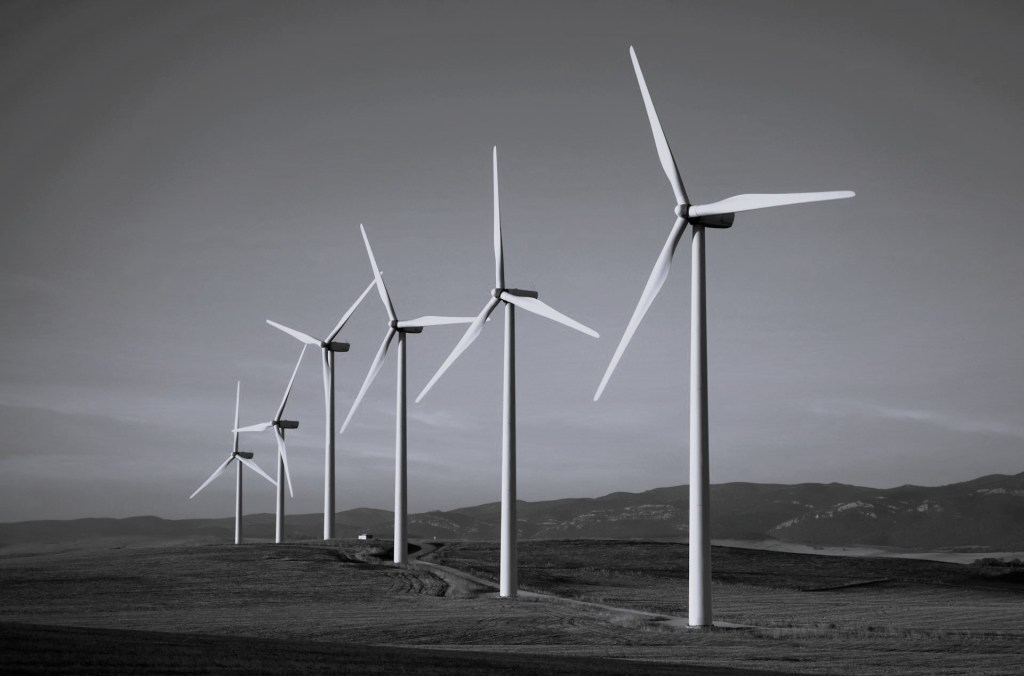
How can we (re)build shared, publicly accountable systems of provision that work for both people and planet? This challenge goes beyond individual consumption choices and instead raises questions about who owns and controls the infrastructures we collectively depend on. By addressing the deeper structures that make essential services expensive, unequal, and environmentally harmful, the foundational approach points toward an economy in which people have democratic control over the systems that sustain everyday life.
Discover more in the references below.
To join the conversation: r.barnthaler@leeds.ac.uk
Readings:
- Bärnthaler, R. (2025) Foundational Economy. In: Vocabulary for Sustainable Consumption and Lifestyles. London: Routledge. Available at: https://tinyurl.com/3tnm5k8h.
- Bärnthaler, R. and Gough, I. (2023) ‘Provisioning for sufficiency: Envisaging production corridors’, Sustainability: Science, Practice and Policy, 19(1), 2218690. https://doi.org/10.1080/15487733.2023.2218690.
- Bärnthaler, R., Mang, S. and Hickel, J. (2025) ‘Toward a post-growth industrial policy for Europe: Navigating emerging tensions and long-term goals’, Globalizations, 22(6), pp. 1124–1148. https://doi.org/10.1080/14747731.2025.2501821.
- Bassens, D. and De Boeck, S. (2022) De Essentiële Economie: Motor voor een sociaal-ecologische transitie. Brussels: ASP Academic and Scientific Publishers.
- Büchs, M., Ivanova, D. and Schnepf, S.V. (2021) ‘Fairness, effectiveness, and needs satisfaction: New options for designing climate policies’, Environmental Research Letters, 16(12), 124026. https://doi.org/10.1088/1748-9326/ac2cb1.
- Calafati, L., Froud, J., Haslam, C., Johal, S. and Williams, K. (2021) ‘Meeting social needs on a damaged planet: Foundational Economy 2.0 and the care-ful practice of radical policy’. Available at: https://foundationaleconomy.com/2021/01/24/meeting-social-needs-on-a-damaged-planet/.
- Coote, A. (2022) ‘A social guarantee to meet everyone’s needs within environmental limits’, The Political Quarterly, 93(4), pp. 649–658. https://doi.org/10.1111/1467-923X.13202.
- Getzner, M. (2025) ‘Conceptualizing the foundational economy as a cornerstone of biodiversity conservation and restoration’, Sustainability, 17(24), 1296. https://doi.org/10.3390/su172411296.
- Gough, I. (2019) ‘Universal basic services: A theoretical and moral framework’, The Political Quarterly, 90(3), pp. 534–542. https://doi.org/10.1111/1467-923X.12706.
- Gough, I. (2020) ‘In times of climate breakdown, how do we value what matters?’, openDemocracy. Available at: https://www.opendemocracy.net/en/oureconomy/times-climate-breakdown-how-do-we-value-what-matters/.
- Hickel, J. (2023) ‘Universal public services: The power of decommodifying survival’. Available at: https://www.jasonhickel.org/blog/2023/3/18/universal-public-services.
- Novy, A., Baumgartner, B., Grabow, S., Plank, L. and Volmary, H. (2024) ‘Greening Red Vienna: Lessons for social-ecological housing provision’, Sustainability: Science, Practice and Policy, 20(1), 2312674. https://doi.org/10.1080/15487733.2024.2312674.
- Vogel, J., Steinberger, J.K., O’Neill, D.W., Lamb, W.F. and Krishnakumar, J. (2021) ‘Socio-economic conditions for satisfying human needs at low energy use: An international analysis of social provisioning’, Global Environmental Change, 69, 102287. https://doi.org/10.1016/j.gloenvcha.2021.102287.
- Wahlund, M. and Hansen, T. (2022) ‘Exploring alternative economic pathways: A comparison of foundational economy and Doughnut economics’, Sustainability: Science, Practice and Policy, 18(1), pp. 171–186. https://doi.org/10.1080/15487733.2022.2030280.

